


The Difference Between Cross-Stitch, Embroidery and Needlepoint
You’re interested in fiber arts — welcome to the club! Needlework is experiencing a modern revival, with people of all ages turning to this craft for mindfulness, self-expression and the joy of creating something by hand. Yet, for beginners, the terminology can be confusing — embroidery, cross-stitch and needlepoint are often used interchangeably, but each offers a unique result.
This guide breaks down the core differences between cross-stitch, embroidery and needlepoint, helps you match your goals to the right craft and shows you how to get started with confidence.
What Is the Difference Between Cross-Stitch, Embroidery and Needlepoint?
Here’s an overview of each activity to help you understand what sets these crafts apart.
What Is Embroidery?
Embroidery is the art of decorating fabric with needle and thread. It is the umbrella term for many needlework techniques. Most people think of free or surface embroidery, where designs are created directly onto fabric without following a grid.
One of embroidery’s greatest strengths is its versatility — you can embroider on many fabrics. Tightly woven cotton, like flour sack towels or napkins, is ideal for beginners because it’s easy to handle and holds stitches well. Other options include denim, linen, felt and even canvas shoes or bags.
Embroidery uses a special thread called floss and sharp needles designed to pierce fabric. The floss is usually made of cotton and comes in a six-stranded skein that can be separated for finer or bolder lines. Other types include rayon, silk, metallic thread, wool fiber and ribbon. Floss is available in a wide range of colors, allowing for detailed, painterly effects.
Needles for embroidery are sharp-tipped — unlike the blunt needles used in cross-stitch or needlepoint — and come in various sizes to match your thread and fabric.
Thanks to its creative freedom, embroidery can be compared to drawing or painting with thread. Patterns can be traced onto fabric, or you can freestyle your own designs and mix and match stitches to create unique textures and effects. Common stitches include satin stitch for filling shapes, backstitch for outlines and French knots for texture.
What Is Cross-Stitch?

Cross-stitch is a form of counted-thread embroidery that’s popular for its simplicity and pixel-art look. Each design is made up of tiny X-shaped stitches that follow a chart or pattern.
Cross-stitch relies on special fabrics with a visible grid, making it easy to place each stitch precisely. Ideal fabrics for cross-stitch include Aida cloth with evenly spaced holes for each stitch and evenweave linen with its finer grid used for more advanced projects. The grid structure helps beginners keep their stitches uniform and their designs accurate.
Cross-stitch uses the same embroidery floss as free embroidery, but the needle and technique differ. Typically, two to three strands of floss are used for most cross-stitch projects. A blunt-tipped tapestry needle passes through the holes in the fabric rather than piercing it. This setup makes cross-stitch gentle on the fabric and easy for beginners.
Cross-stitch is all about following a pattern, which makes it suitable for those who enjoy structure and precision. Each X is placed according to a chart, with a square representing a stitch. This makes it easy to spot and fix mistakes for beginners. The result is a neat, uniform design that can be as simple or complex as you like.
What Is Needlepoint?
Needlepoint is a type of embroidery that covers the entire surface of a stiff canvas with stitches, creating durable, textured pieces perfect for home décor and accessories.
Unlike embroidery and cross-stitch, needlepoint requires a special canvas that holds its shape. This canvas is a stiff, open-weave mesh, often made from cotton or linen. The holes in the canvas guide the placement of each stitch, and the entire surface is typically covered, resulting in a dense, durable textile.
Needlepoint uses thicker fibers and a blunt needle to fill the canvas completely. Wool or tapestry yarn is used most often, but cotton or silk can also be used. The thickness of the yarn gives needlepoint its signature texture and durability. A tapestry needle is ideal for needlepoint because its blunt tip glides easily through the canvas holes without splitting the fibers.
While the tent stitch is the most common, needlepoint has a wide range of stitches for creative expression, whether geometric, pictorial or abstract. Tent stitch — a simple diagonal — is the foundation, but other stitches add texture and dimension.
Needlepoint is ideal for items that need to withstand wear, like pillows, belts and upholstery.
How to Choose the Right Craft for Your Project
Choosing embroidery vs. cross-stitch vs. needlepoint depends on your creative goals and the type of project you want to make. Here’s how to match each craft to your needs.
Embroidery
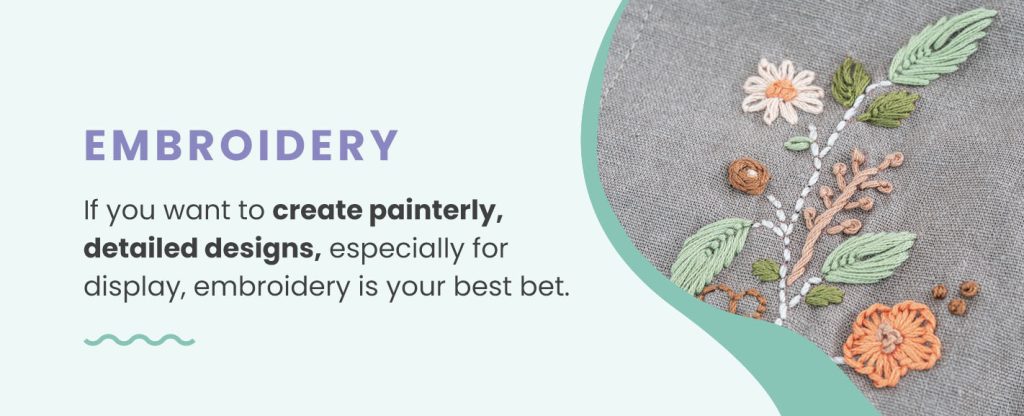
If you want to create painterly, detailed designs, especially for display, embroidery is your best bet. This technique is ideal for someone who wants:
- A freeform process to create intricate shading, curves and textures.
- To make hoop art, wall hangings or personalized clothing.
- Express creativity and experiment with different stitches.
Cross-Stitch
Cross-stitch is perfect for those who love patterns, symmetry and the look of pixel art. You might want to give cross-stitching a try if you like:
- The grid system that makes following complex patterns easy.
- To make framed art, ornaments, bookmarks or greeting cards.
- A methodical, meditative craft that has a lot of structure.
Needlepoint
Needlepoint is the go-to for projects that need to last, like home décor and accessories. This activity may be right for you if you are interested in:
- A durable, tactile texture with a substantial, raised finish.
- Making pillows, belts, upholstery, and other sturdy home décor.
- A long-lasting result for pieces that will see frequent use.
Getting the Right Supplies
Ready to try your hand at needlework? Whether you’re drawn to embroidery, cross-stitch or needlepoint, starting with the right tools and a manageable project can make all the difference. Here’s what you need to know to set yourself up for success.
Embroidery Tools
To begin with embroidery, you’ll need a few basic supplies:
- A piece of tightly woven cotton is ideal for beginners — flour sack towels are an affordable option
- Embroidery floss in a color of your choice
- A sharp embroidery needle
- An embroidery hoop to keep your fabric taut
- Marking tools — tailor’s chalk or water-soluble markers to map your design
- A good pair of scissors
Cross-Stitch Tools
For cross-stitch, your toolkit will consist of the following items:
- Aida cloth or another Evenweave fabric with a visible grid
- Embroidery floss
- A blunt-tipped tapestry needle
- An embroidery hoop
- Marking tools
- Sharp scissors
Needlepoint Tools
Needlepoint art requires the following supplies:
- A stiff, open-weave mesh canvas as your foundation
- Tapestry yarn or another thick fiber
- A blunt tapestry needle
- Markers or chalk
- Scissors
Choosing Your First Project
Looking for some beginner-friendly project ideas to spark your creativity?
When you’re starting out, select a small, manageable project that will let you practice basic techniques as you experience the joy of your new craft. Consider beginning with a simple floral motif, a bookmark or a mini pillow — projects that can be completed in a few sessions.
Take your time. These activities will get easier as you refine your skills and learn new techniques.
Whether you choose cross-stitch vs. needlepoint vs. embroidery, pick a project that genuinely excites you and matches your current skill level. Enjoying the process is key to building confidence and developing your skills.
For a visual idea of the kinds of projects you’d like to try out, take a look at the Embroiderers’ Guild of America’s free projects for more inspiration to get stitching!
Cross-Stitch, Needlepoint and Embroidery Tips for Success
Follow these helpful tips for making the most of your new hobby:
- Choose the right workspace: Setting yourself up for a positive experience is just as important as having the right tools. Make sure you work in a well-lit area and take regular breaks to avoid eye strain, especially during longer sessions. Find a comfortable spot that allows you to relax your wrists to avoid feeling strained while working on your design.
- Work up to more advanced designs: Before diving into a larger or more complex project, spend some time practicing basic stitches on scrap fabric or canvas. This will help you build muscle memory and confidence.
- Expect blunders: Remember that needlework is as much about the journey as the finished piece — don’t stress about perfection. Embrace mistakes as learning opportunities and focus on enjoying the creative process.
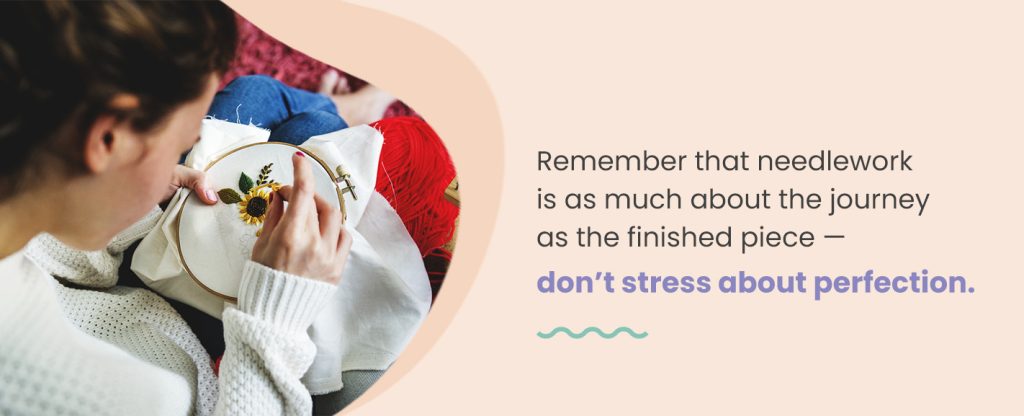
- Track your progress: Consider taking pictures of your work after each session. These photos make seeing your progress easy and offer motivation for you to keep going. After your design is finished, you can look back on all your hard work.
- Label your projects: If you are someone who likes to jump around to different projects, stay organized and label each work in progress to avoid confusion later.
- Join a community: There are many crafting communities online and in person where you can find endless inspiration, exchange hacks and talk through your ideas. Some communities and clubs will help you stay accountable for your goals, whether those objectives are to work on your project every day, try a new technique or finish a design by a certain date.
Your Frequently Asked Questions
Still have questions? Here are answers to some of the most common beginner queries:
- What’s the best craft for beginners? All three are beginner-friendly, but cross-stitch and simple embroidery are especially accessible.
- What is crewel vs. needlepoint? Crewel is an embroidery technique that uses a loosely twisted two-ply wool yarn and a sharp needle on a densely woven fabric to create designs like flowers and vines for curtains and clothing. In contrast, needlepoint uses a blunt needle to stitch on an open-weave canvas, covering the entire canvas to form a sturdy, textured piece for upholstery and decorative hangings.
- Is needlepoint harder than cross-stitch or embroidery? Needlepoint isn’t necessarily harder than cross-stitch or embroidery — it’s just different! Needlepoint uses a stiff canvas and thicker yarn, which can be easier to handle for some beginners. Because needlepoint often covers the entire canvas and can involve a variety of stitches, larger projects may take more time and patience. Ultimately, the best craft for you depends on your interests and which technique you find most enjoyable.
Key Benefits of Needlework Hobbies
Crafters are drawn to needlework for more than just aesthetics — it’s a way to relax, express values and connect with others. Here are two excellent reasons to give it a try.
Boost Your Mood and Brain Health
Whether you choose needlepoint, embroidery or cross-stitch, needlework can boost your mood and support brain health. The combination of repetitive motion, focus and creative expression can reduce stress and promote relaxation.
According to research, textile arts like embroidery can help regulate emotions, improve concentration and even improve overall well-being by activating different areas of the brain.
The process of stitching provides opportunities for:
- Skill-building.
- Problem-solving.
- Learning.
- Determination.
- Tactile and visual stimulation.
Gain a Sense of Community
The revival of needlework is drawing people of all ages and backgrounds, uniting beginners and experienced makers in a vibrant, creative movement.
Thanks to online groups and social media platforms, it’s easy to connect with others who share your passion for embroidery, cross-stitch or needlepoint. Whether you’re looking for inspiration, advice or a place to share your latest project, there’s a welcoming community waiting for you.
Stitch-alongs, virtual workshops and online collaborative projects are reinventing this ancient craft with group activities that build camaraderie and a sense of shared accomplishment.
Have you heard of watercolor embroidery, stitched trees or embroidered magazine covers? By joining a needlework community, you’ll learn new techniques and discover fresh ideas while being part of a supportive network that celebrates creativity and self-expression.
Start Your Stitching Journey with Cotton Creations
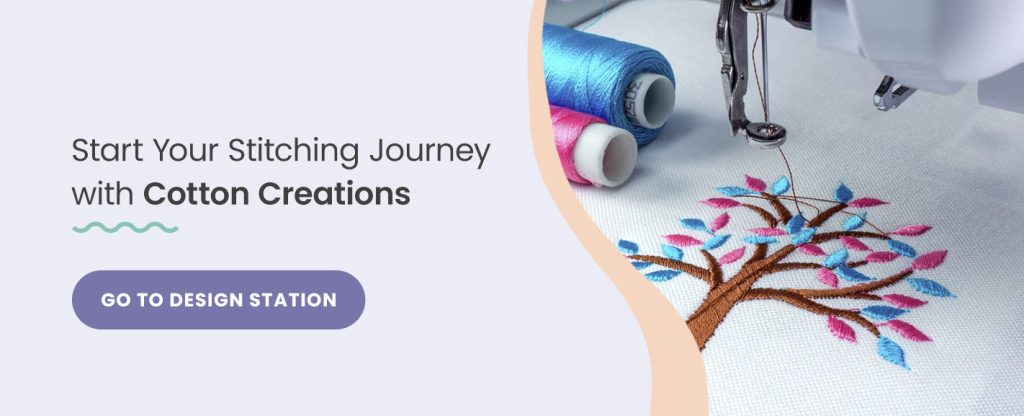
No matter which craft you choose, the right fabric makes all the difference. Cotton Creations has high-quality, affordable flour sack towels, napkins and aprons, which are perfect blank canvases for your first or next project. Here’s why:
- 100% cotton, tightly woven and easy to stitch.
- No minimum order — great for beginners and small-batch makers.
- Versatile for embroidery, cross-stitch and needlepoint.
- Try a simple floral embroidery on a towel, a cross-stitch monogram on a napkin or freestyle a cotton tote bag.
Share your finished projects with the Cotton Creations community!
Are you ready to start your creative journey with the right materials? Contact us for more information or explore Cotton Creations’ shop today for your ideal blank canvas.
SHARE THIS: